
5 Reasons for AI-Based Sentiment Analysis in Your Company
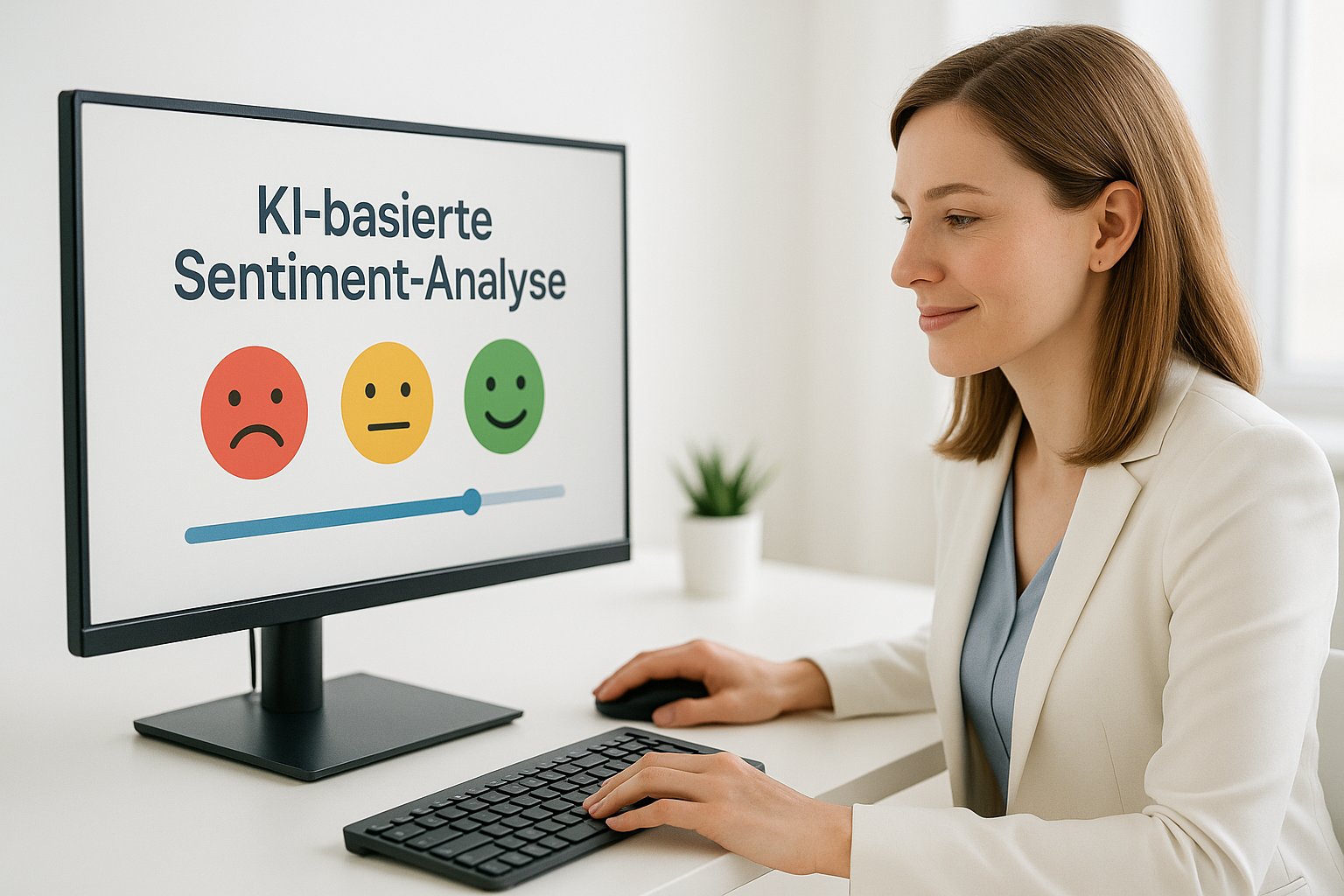
Introduction: What Is AI-Based Sentiment Analysis?
In today’s digital business world, AI-based sentiment analysis is revolutionizing the way companies operate. Early adopters report impressive efficiency gains.
Implementing AI-based sentiment analysis may seem challenging at first. However, the long-term benefits clearly outweigh the initial investments.
AI-based sentiment analysis is evolving from a trend into a necessity. Companies that invest now secure decisive competitive advantages.
The Benefits of AI-Based Sentiment Analysis
Error rates drop dramatically with AI-based sentiment analysis. Automation eliminates human slip-ups and increases quality.
The scalability of AI-based sentiment analysis enables growth without proportional increases in headcount. Companies become more agile and responsive.
Employee satisfaction rises when AI-based sentiment analysis takes over routine tasks. Teams can focus on creative and strategic work.
Time savings are the most obvious benefit of AI-based sentiment analysis. Processes that used to take hours are completed in minutes.
- Significant cost savings through automation
- Improved customer satisfaction through faster response times
- Increased employee productivity by relieving routine tasks
- 24/7 availability without additional personnel costs
- Reduction of human error through systematic processes
Practical Application
Best practice shows that AI-based sentiment analysis should be introduced step by step. Pilot projects validate the approach before a company-wide rollout takes place.
Successful companies make AI-based sentiment analysis a top-management priority. Only with executive backing can digital transformation succeed.
Practical Implementation
Integrating AI-based sentiment analysis into existing workflows requires tact. Change management is just as important as the technical implementation.
Success Factors
Integrating AI-based sentiment analysis into existing workflows requires tact. Change management is just as important as the technical implementation.
Successful companies make AI-based sentiment analysis a top-management priority. Only with executive backing can digital transformation succeed.
Implementation in Your Company
Introducing AI-based sentiment analysis starts with a thorough current-state assessment. Only those who understand their processes can digitize them successfully.
KPIs must be defined before introducing AI-based sentiment analysis. Only measurable goals enable an objective evaluation of success.
Choosing the right partner for AI-based sentiment analysis determines success or failure. References and industry experience are more important than price.
Employee buy-in is critical for AI-based sentiment analysis. Early involvement and transparent communication prevent resistance.
- Continuous monitoring and optimization of the implementation
- Analysis of current business processes and identification of optimization potential
- Selecting the right technology partners and solution providers
- Launch a pilot project to validate the concept
- Gradual expansion to additional areas of the company
Challenges and Solution Approaches
Legacy systems often slow down AI-based sentiment analysis. Sometimes modernizing the IT infrastructure is unavoidable.
Data protection is often the biggest challenge with AI-based sentiment analysis. GDPR compliance must be considered from the very beginning.
Practical Implementation
The shortage of skilled professionals makes implementing AI-based sentiment analysis more difficult. External expertise or intensive training is often necessary.
Success Factors
Legacy systems often slow down AI-based sentiment analysis. Sometimes modernizing the IT infrastructure is unavoidable.
The shortage of skilled professionals makes implementing AI-based sentiment analysis more difficult. External expertise or intensive training is often necessary.
Future Outlook
The next generation of AI-based sentiment analysis will be even more user-friendly. No-code approaches democratize access to the technology.
Integration will become the key factor in AI-based sentiment analysis. Isolated solutions will give way to connected ecosystems.
The future of AI-based sentiment analysis will be driven by AI. Machine learning makes systems increasingly intelligent and autonomous.
- Advanced analytics capabilities for deeper business insights
- Greater personalization through advanced algorithms
- Integration of machine learning for even smarter automation
- Improved natural language processing for better interactions
- Cross-platform integration for seamless user experiences
Best Practices and Success Factors
Documentation is not a necessary evil in AI-based sentiment analysis, but a success factor. Well-documented processes make scaling and maintenance easier.
Continuous improvement makes AI-based sentiment analysis future-proof. Regular reviews and updates keep the system up to date.
Successful AI-based sentiment analysis projects start small and grow organically. MVP approaches reduce risk and accelerate time-to-value.
User feedback is worth its weight in gold for AI-based sentiment analysis. Users know best where optimization potential exists.
- Step-by-step implementation with regular evaluation
- Regularly update the technical infrastructure
- Make data protection and security the highest priority
- Continuous optimization based on user feedback
- Involve employees in the process from the very beginning
Conclusion: AI-based sentiment analysis offers companies significant potential to optimize their business processes. Through strategic implementation and continuous development, sustainable competitive advantages can be created. The future belongs to companies that successfully integrate innovative technologies like voiceOne into their operations.